
Antigen discovery underpins the safety and precision of immune-based therapies. The Translational Antigen Discovery Laboratory studies the immunopeptidome, the repertoire of peptide–HLA complexes displayed on the cell surface as a functional language through which cells communicate their internal state. Using state-of-the-art immunopeptidomics and mass spectrometry, we directly identify biologically and clinically relevant antigens and translate these insights into actionable targets for next-generation immunotherapies.

Research group
Overview
The Translational Antigen Discovery Laboratory operates at the interface of technology development, fundamental immunology, and translational therapy design. Our work is structured around four interconnected research directions that together aim to transform antigen discovery into a clinically actionable platform for immunotherapy.
Our Labs research and our childhood cancer immunotherapy program holds great promise for revolutionising cancer treatment with more targeted and effective approaches.
First, we advance mass spectrometry and immunopeptidomics technologies to enable sensitive, reproducible, and scalable measurement of peptide–HLA complexes from diverse biological samples, including limited clinical material. By pushing the boundaries of analytical performance and experimental design, we seek to make direct antigen measurement compatible with real-world translational and clinical applications.
Second, we focus on the development of off-the-shelf immunotherapies enabled by non-classical HLA molecules. By exploiting the limited polymorphism and unique biology of non-classical HLA, we aim to identify shared, disease-relevant peptide–HLA targets that can support broadly applicable immune-based therapies, overcoming key limitations of patient-specific approaches.
Third, the laboratory is driven by a fundamental biological question: how the immunopeptidome functions as a language of the cell. We study how transcription, translation, protein turnover, stress, and disease states are encoded in peptide–HLA presentation, and how this surface-displayed information reflects cellular identity and dysfunction.
Finally, we apply these technologies and biological insights to guide therapeutic development and decision-making. Antigens identified through discovery pipelines are prioritised and translated into downstream applications, including targeted immunopeptidomics assays, T cell–based therapies, and vaccines. Through close collaboration with clinicians and industry partners, we aim to ensure that immunopeptidomic data directly informs therapy selection, design, and evaluation.
Together, these four directions position the laboratory to bridge fundamental biology and translational impact, enabling a new generation of precision immunotherapies grounded in empirical antigen discovery.

Diseases we research
Areas of focus
- Mass spectrometry–based immunopeptidomics technology development | Optimisation of HLA-I and non-classical HLA peptide isolation, LC–MS acquisition strategies, quantitative workflows, and computational analysis pipelines for discovery and targeted applications.
- Non-classical HLA antigen discovery for off-the-shelf immunotherapies | Systematic identification and validation of shared peptide–HLA complexes presented by non-classical HLA molecules, enabling broadly applicable immune-based therapeutic strategies.
- Mechanistic interrogation of the immunopeptidome as a cellular information layer | Dissection of how transcriptional, translational, proteostatic, and stress-related processes are encoded in peptide–HLA presentation across physiological and disease contexts.
- Translational application of immunopeptidomic data for therapeutic development and decision-making | Integration of empirical antigen discovery with immunogenicity assessment, targeted assay development, and therapy design to inform clinical and preclinical immunotherapy strategies.
Research Group Head | Associate Professor Pouya Faridi
Cancer immunotherapy works best when the immune system is guided toward the right targets. My research aims to understand what tumour cells present to immune cells, and to translate this insight into safer and more effective treatments.

Meet the team

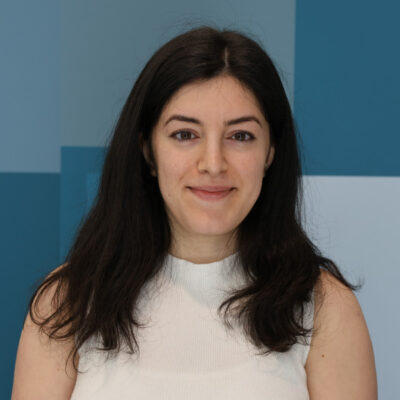 Dr Farnaz Fahimi
Postdoctoral Scientist
Dr Farnaz Fahimi
Postdoctoral Scientist
 Dr Gabriel Goncalves
Postdoctoral Scientist
Dr Gabriel Goncalves
Postdoctoral Scientist
 Dr Tima Shamekhi
Postdoctoral Scientist
Dr Tima Shamekhi
Postdoctoral Scientist
 Dr Terry Lim
Honorary Research Associate
Dr Terry Lim
Honorary Research Associate
 Varnika Hemanth
Research Support Staff
Varnika Hemanth
Research Support Staff
 Nivedhitha Selvakumar
Research Support Staff
Nivedhitha Selvakumar
Research Support Staff
 Isaac Woodhouse
Research Support Staff
Isaac Woodhouse
Research Support Staff
 Grace Huang
PhD Student
Grace Huang
PhD Student
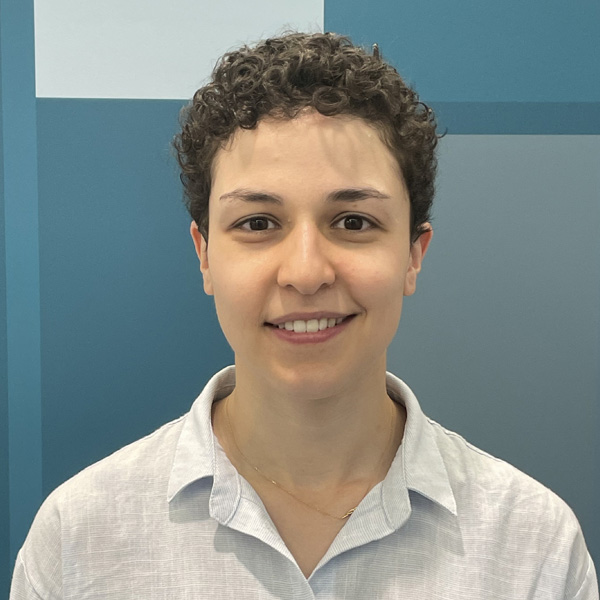 Mersedeh Shayan
PhD Student
Mersedeh Shayan
PhD Student
 Nurfarhanah (Farhanah) Syed Sulaiman
PhD Student
Nurfarhanah (Farhanah) Syed Sulaiman
PhD Student
 Erwin Tanuwidjaya
PhD Student
Erwin Tanuwidjaya
PhD Student
 Theresa Joseph
Masters Student
Theresa Joseph
Masters Student
 Maddy Clark
Honours Student
Maddy Clark
Honours Student
News from the lab
Collaborators
